7 Decorating Mistakes That Make a Small Room Look Smaller (and How to Fix Them)
7 Decorating Mistakes That Make a Small Room Look Smaller (and How to Fix Them)
A small room does not have to feel small. Two rooms with the same square footage can feel completely different, and the difference is almost never the size of the room. It is the decorating choices inside it. A sofa that is one size too big, curtains hung a few inches too low, or a rug that stops short of the furniture can quietly shrink a room that had plenty of potential, and most of us make at least one of these decorating mistakes in a small room without ever realizing it.
The good news is that every mistake below has a fix, and most of the fixes cost little or nothing. You do not need to knock down a wall or buy all new furniture to make a small room look bigger. You need to spot the habit that is working against you and change it. Work through the seven mistakes one at a time, starting with whichever one sounds most familiar. One honest note: the photos in this article are generic room shots, not pictures of the exact products mentioned, so use them as a guide to the look, not as a picture of the exact item.
This post contains affiliate links. If you buy through them, I may earn a small commission at no extra cost to you.

Mistake 1: Buying Furniture That Is Too Big for the Room
The most common decorating mistake in a small room is falling in love with a piece of furniture in a showroom and bringing it home to a room it was never meant for. That deep, plush sectional looks inviting under showroom lights, but in a ten-by-twelve-foot living room it eats the floor, blocks the walkways, and leaves no room to move around it. When one piece of furniture takes up most of the floor, the eye reads the whole room as full, and a full room always feels like a small room.
The fix starts before you shop, with a tape measure and a floor plan you can trust. Measure the room, then mark the footprint of any large piece on the floor with painter's tape before you buy it. Leave at least 30 inches of clear walking space around the main seating area, and if the tape outline leaves less than that, the piece is too big, no matter how comfortable it felt in the store. Choose fewer, well-proportioned pieces instead of one giant one: an apartment-size loveseat with legs, typically $250–$600, seats two people comfortably and leaves the floor visible underneath it, which is what makes a room feel airy. Furniture with exposed legs beats furniture that sits solidly on the floor, because the gap underneath lets your eye travel further and the room reads as larger.
Mistake 2: Pushing Every Piece of Furniture Against the Walls
Pushing the sofa, the chairs, and the bookcase flat against the walls feels like the logical way to open up floor space, but it usually does the opposite. When everything hugs the edges of the room, you end up with a big empty hole in the middle and a ring of furniture that traces the walls like a border. Your eye follows that border, measures the room in one glance, and the space feels boxed in, more like a waiting room than a living room.
The fix is to float your furniture, even by just a few inches. Pull the sofa three to four inches away from the wall and suddenly there is a shadow line behind it, a sense of depth, and a room that looks arranged rather than crowded to the edges. In a living room, try pulling the seating group toward the center and anchoring it with a rug, leaving a clear path behind the sofa instead of a gap nobody uses. In a bedroom, a few inches between the bed and the wall makes the bed feel placed, not wedged in. The goal is not to waste floor space. It is to give every piece a little breathing room so the eye stops reading the walls as the edge of the world.

Mistake 3: Hanging Curtains Too Low and Too Short
Curtains are one of the cheapest ways to make a room look taller, and one of the easiest to get wrong. When the curtain rod sits just above the window frame and the panels stop at the sill or hover a few inches above the floor, the window looks small, the wall gets chopped into pieces, and the ceiling looks lower than it is. Short, narrow curtains also leave the sides of the window exposed, so the window reads as a small hole in the wall instead of a generous source of light. Heavy, dark curtains make the problem worse by blocking daylight and absorbing the light that does get in.
The fix is to hang your curtains high and wide, and to let them reach the floor. It takes one afternoon and a drill, and it changes the whole room. Here is the step-by-step fix:
**Step 1: Measure the window.** Measure the width of the window frame and the distance from the floor to the ceiling. Write both numbers down before you shop, because guessing is how curtains end up too short.
**Step 2: Mount the rod high.** Install the curtain rod four to six inches above the window frame, or closer to the ceiling if you have the height. The higher the rod, the taller the wall looks, because the eye follows the fabric all the way up.
**Step 3: Extend the rod wide.** Choose a rod that extends eight to twelve inches beyond the window frame on each side. When the curtains are open, the panels should sit on the wall, not over the glass, so the full window stays uncovered and the daylight pours in.
**Step 4: Buy long enough panels.** Pick panels that reach the floor, or just kiss it. For a standard eight-foot ceiling, 84-inch panels usually work with a high rod, and 96-inch panels suit taller walls. Measure from the rod to the floor rather than trusting the package size.
**Step 5: Hang and adjust.** Slide the panels on, spread them evenly, and check that they hang straight and just touch the floor. If they puddle, they are too long; if they hover, they are too short.
**Step 6: Choose light fabric.** Light, airy fabric in a pale color keeps the daylight coming through even when the curtains are closed. Sheer white curtains, typically $20–$45 a pair, soften the window without darkening the room, and they cost far less than new windows ever would.
Mistake 4: Choosing a Rug That Is Too Small
A rug that is too small is a quiet space-shrinker. A five-by-seven rug in a ten-by-twelve-foot living room floats in the middle of the floor, touches nothing, and makes the seating area look like a raft adrift in an empty room. When the rug is too small, the eye sees a lot of bare floor around it and reads the seating group as cramped inside its own little island.
The fix is to size the rug to the furniture, not to the budget leftover. The front legs of the sofa and every chair should sit on the rug, with six to twelve inches of bare floor showing around the edges of the rug itself. For most small living rooms, that means an eight-by-ten rug, and for a small bedroom it means a rug extending at least two feet beyond each side of the bed. If a large rug in a quality material is out of reach right now, buy the right size in a simple flatweave instead of a small rug in a fancy pattern. A large 8x10 area rug in a light neutral, typically $80–$250, anchors the whole seating area and makes the floor read as one continuous surface, which is exactly what makes a small room feel bigger. A light color helps too, because a pale rug reflects light upward while a dark rug absorbs it.

Mistake 5: Painting Every Wall Dark
Dark paint can be dramatic and beautiful, and in the right room it feels cozy and intentional. But when every wall, and sometimes the ceiling too, is painted in a deep charcoal, navy, or chocolate brown, a small room can start to feel like a cave. Dark colors absorb light instead of reflecting it, so the walls seem to advance toward you, the corners disappear into shadow, and the room feels enclosed even when the square footage is perfectly reasonable.
The fix is not to ban dark colors. It is to give them balance. Paint the walls a light, warm white or pale neutral, and let the light bounce around the room instead of being swallowed. If you love a dark color, use it on one accent wall, or on the lower half of the walls with a pale color above, so you get the drama without the cave effect. Painting the ceiling the same pale color as the walls, instead of a stark contrasting white, blurs the line where the wall ends and the ceiling begins, which makes the ceiling feel higher. Before you commit to any color, paint a large swatch on a piece of poster board and move it around the room for a day, checking it in morning light, evening light, and lamplight. Paint always looks different on your wall than it did on the tiny chip in the store, and a swatch test costs almost nothing while a full repaint costs a weekend.
Mistake 6: Relying on a Single Overhead Light
One ceiling light in the middle of a small room lights the floor directly underneath it and leaves the corners and the walls in shadow, and those dark corners are exactly what make a room feel smaller. Your eye reads shadow as a boundary, so a room with four dark corners feels like it ends much sooner than it does. This is one of the most common decorating mistakes in a small room, because lighting is usually the last thing anyone thinks about, long after the furniture and the paint are decided.
The fix is to layer your lighting so no corner stays dark. Aim for three sources in every small room: ambient light from the ceiling, task light where you read or work, and accent light that washes the walls. A slim LED floor lamp, typically $30–$80, tucked into the darkest corner, erases the shadow that was shrinking the room, and a small table lamp on a sideboard does the same job on a smaller scale. Then add a mirror, which is the oldest trick for making a small room look bigger and still one of the best. Hang a large wall mirror, typically $40–$120, directly across from a window, and it doubles the daylight and the view, creating a sense of depth that fools the eye into seeing more space than there really is.
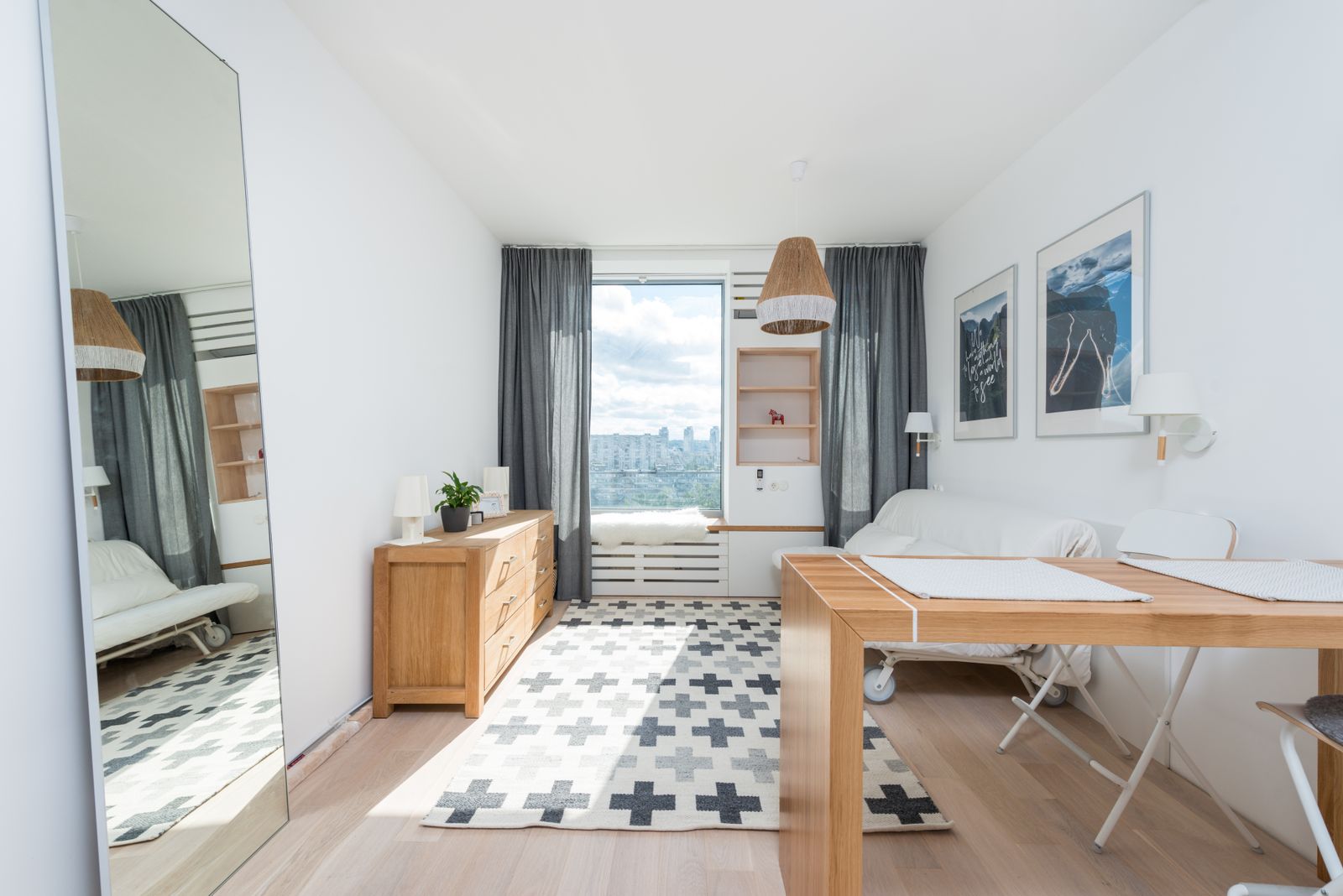
Mistake 7: Filling Every Surface
A small room tempts you to use every inch of it, and that is how every surface ends up covered. Ten tiny objects on a shelf, six pillows on a loveseat, a coffee table crowded with books, candles, remotes, and a stack of mail, and walls hung with small frames in every gap. Each item on its own is fine, but together they give your eye too many things to look at, and all that visual noise makes the room feel busy, cluttered, and smaller than it is.
The fix is restraint, not emptiness. Edit each surface down to three items at most, and make one of them large enough to matter: one large vase instead of five small ones, one framed print instead of a scattered cluster of tiny frames, three pillows on a loveseat instead of six. Empty space is not wasted space. It is what lets the eye rest and travel, and a surface with breathing room makes the whole room feel calmer and larger. Give everything a home behind a closed door where you can, because open shelves full of odds and ends read as clutter while the same items inside a cabinet disappear. Then build a two-minute reset into your day: clear the coffee table, fluff the pillows, and put the mail in its place before you sit down in the evening. A small room that is edited and reset daily looks and feels bigger than a large room that is never tidied, and the habit costs nothing at all.
Start Here: The 3 Fastest Fixes
If you only have one afternoon, start with the three fixes that change how big a room feels the fastest. First, hang your curtains high and wide, with panels that reach the floor, so the windows look taller and the daylight reaches every corner. Second, pull the sofa three to four inches off the wall and clear every surface down to three items or fewer, so the room stops reading as crowded. Third, hang a large mirror across from the window and add a floor lamp to the darkest corner, so light bounces around the room instead of dying in the shadows.
Do those three things, then stand in the doorway and look at the room with fresh eyes. The square footage has not changed, but the room will feel bigger, brighter, and calmer, because you fixed the decorating mistakes that were shrinking it instead of living around them.


Comments
Post a Comment